

How to Plan a Lifetime of Adventure When Travelling the World

How to Plan a Lifetime of Adventure When Travelling the World
Seeing the world appears easy until you’ve been doing it for half a year, you’re tired because you’ve been re-locating every 72 hours, and you can’t even recall the name of the town you’re currently staying in. The issue isn’t with traveling itself – it’s the system you use to organize it.
Rethink The Unit Of Travel
The typical method is to keep count of the countries. Acquire the stamps. Travel quickly. It’s exhausting. It’s a guaranteed burnout. And a surefire way to ensure you have more missed connections, half-remembered places, and soon-forgotten experiences than you can count between the rays of the departing plane’s exhaustion fumes.
Slow travel fixes this. Structurally. Choose your region, plop yourself down for two or three months and go local. Spending less and regenerating more, you’ll have greater actual exposure to the region you’re in, and far better lifelong memories of visited places. After all, each of Thailand, Cambodia, and Vietnam has enough variance to compensate for the steep price you pay to travel internationally during the rest of your life.
Build Around Active Transport, Not Passive Itineraries
The most important decision you can make with regards to a long-term travelling blueprint is how you will travel. Tour buses, package deals and pre-set itineraries take all that out of your hands and place it neatly into someone else’s. This is fine for a two-week break. It is far from ideal for a lifetime of adventure.
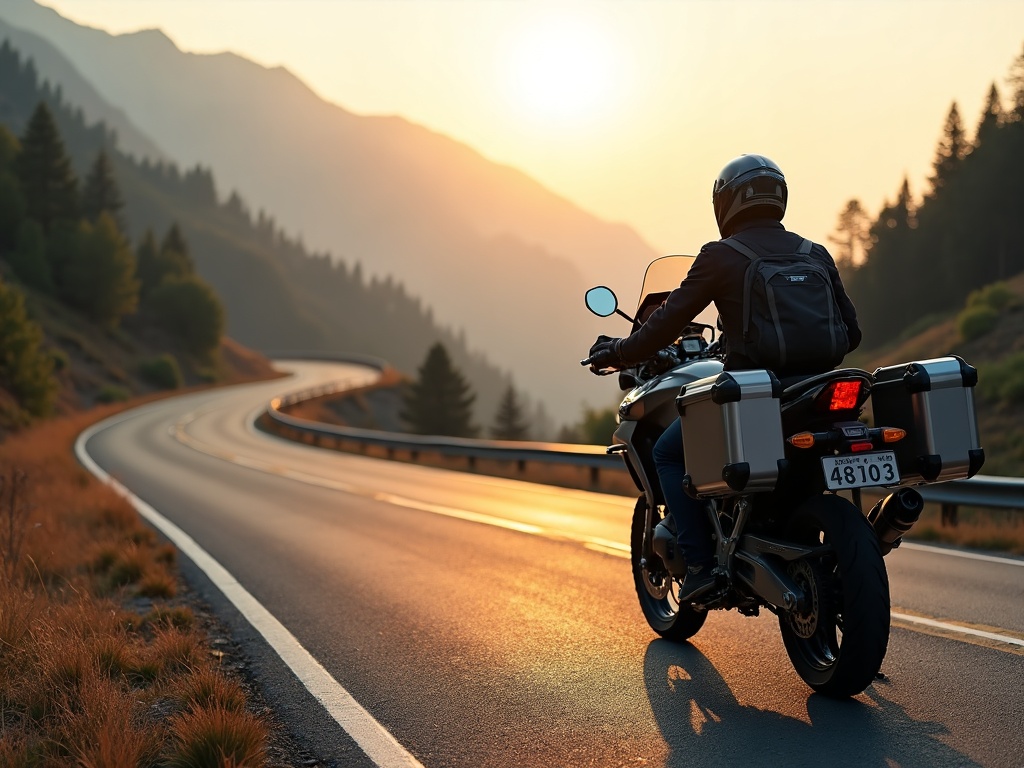
When you travel by bike, none of the above applies. You decide where, when and how fast you go. You determine when you will stop with a welcome difficult of navigating being a prime reason you will have the opportunity to actually explore where you are visiting in more depth. Not from a tour bus window two meters off the ground. You can pull over and take a break in that peaceful looking mountain village for two hours. No schedule means you can double back and try that last turn-off. Most importantly, however, you can ride terrain that is simply inaccessible by public transport. This is the precise reason to travel by motorcycle and its brothers.
Now’s a time when you can still be a pioneer. You can still discover routes and places that no-one else has ever ridden to. The Himalayas are the clearest example of where this matters – the mountain passes, remote valleys, and high-altitude roads of Nepal aren’t accessible by coach tour. For riders planning that kind of expedition, https://tigitnepal.com/ provides the local rental infrastructure and route knowledge that makes it logistically viable. For the vast quantity of the world and its attractions, it is the motorcycle and only the motorcycle that is the key to proper exploration.
Balance The Budget Across High and Low Intensity Periods
A mistake long-term travelers mistakenly make is thinking that all months cost the same. They don’t. A Himalayan trek, a Patagonia route, or a sailing passage are high-cost, logistically challenging, and physically exhausting. But you can’t do it and can’t afford it every month for years on end.
The solution is in the alternation. We hereby invite you to consciously choose and commit to the bucket-list experiences. But don’t immediately follow them with another high-dose, high-cost, high-effort month. Do your magnificent obsession and then move to some low-cost corner of the world where the daily cost is low. Start Living in the Real World. Vietnam, Georgia, Colombia, Portugal. There’s enough wonderful on this planet that you certainly do not have to keep moving on to the next adventure.
That’s the mechanic of it. High-Engagement expedition, low-cost recovery period, repeat. That’s what people who travel for years know and the people who burn out after six months don’t get.
Gear As Infrastructure, Not Luxury
Minimalism in travel does not imply hardship, but smart choices. Pick items that justify their space and weight under various circumstances. For example, a jacket that keeps you warm at high altitudes and also protects you from light rain in a moderate-temperature region is definitely a good investment.
Organize your travel kit based on building blocks or modular layers. Two or three essentials that can be worn together in different ways will have you covered more effectively than a bunch of single-purpose items. This rule also applies to gadgets, shoes, and even medicines. Pack items that you will need for the most extreme conditions of your trip and you will automatically be sorted for the milder parts.
The Mindset That Sustains It
It isn’t luck or wealth that allows one to travel for years; it’s all in how you’ve designed the system. Slow travel and active transport, budget alternation, modular gear, and honest safety planning – these are not discrete tips; they are the connected logic of a travel life that lasts.